
Keep the Memories, Not the Clutter: A Compassionate Guide to Letting Go

Sentimental items are often the hardest things to declutter. They represent people we love, chapters of life we don’t want to forget, and versions of ourselves that shaped who we are. Old photos, children’s artwork, inherited items, letters, and keepsakes can feel irreplaceable—and the thought of letting them go can bring up guilt, fear, and hesitation.
And here’s the tricky part: sentimental clutter isn’t “just stuff.” It’s emotional. It’s personal. It’s tied to memory, identity, and relationships. So if you’ve ever thought “I know I should deal with this, but I just can’t”—you’re not lazy. Your brain is doing what it’s designed to do: protect what feels meaningful.
Let’s talk about why this is hard, and how to let go with heart—without feeling like you’re throwing away your past.
Why Sentimental Clutter Feels So Heavy
Most of the things we keep are functional. Even if you only use something once a year, it still has a job.
Sentimental items are different. We keep them because of the feelings they inspire.
Psychologists have found that people often believe certain objects carry a unique “essence”—meaning the original feels special in a way a replacement doesn’t. (It’s why kids will often choose their favorite toy over an identical copy.) That same “essence” is why a photo of an object can feel different than the object itself—even if the photo holds the memory.
On top of that, sentimental items often represent:
who we were at a certain time in life
relationships we don’t want to lose
love we feel responsible for honoring
So when you try to let go of an object, it can feel like you’re letting go of the person, the season, or the meaning. That’s why the guilt gets loud.
Common guilt thoughts sound like:
“This was passed down to me.”
“Someone spent money on this.”
“My kids might want this someday.”
“If I let this go, I’m being disrespectful.”
If you’ve been carrying those thoughts, I want to say this clearly:
Keeping everything is not the same as honoring everything.
A Quick Reframe (That Actually Helps)
Here’s a question I ask clients all the time:
If this item is meaningful… is it currently being treated like it’s meaningful?
Because a keepsake tucked in a dusty bin in the attic isn’t being cherished—it’s being stored.
If you can’t see it, enjoy it, or access it easily, it often becomes “background clutter.” The memory gets buried right along with it.
A more peaceful goal is this:
Keep fewer things, but love them more.
My Grandmother’s Plates and Teacups (A Real-Life Example)
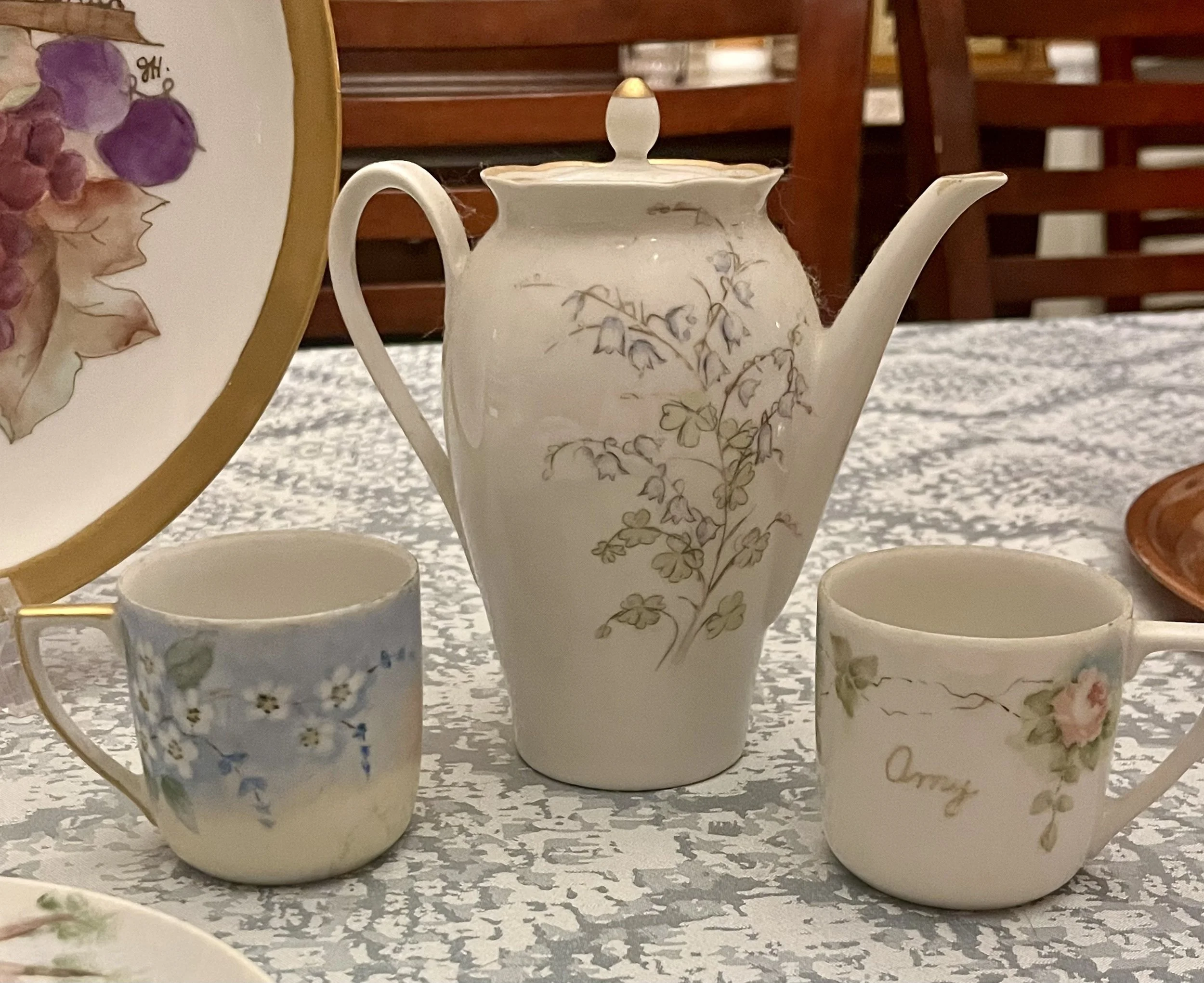
I’ve been on the sentimental receiving end myself. I inherited my grandmother’s hand-painted plates and teacups. (Thanks, Mom 😊)
There were a lot of pieces—each one beautiful, each one connected to her. But keeping all of them didn’t fit my home or my life. And if I’m being honest, storing them out of obligation started to feel heavy.
So I did two things:
I curated the pieces I truly loved—the ones that felt most “her” to me and that I could picture actually using or displaying.
I photographed the rest and sat down with my mom to capture the stories: who gave them to her, when she used them, and what we remembered about holidays, family gatherings, and her personality.
That process did something surprising:
I felt more connected to my grandmother after letting some pieces go—not less—because the stories were finally out in the open, not trapped in boxes.
Letting go didn’t erase her memory.
It helped me carry it in a way that felt intentional and lighter.
How to Start Letting Go (Without Overwhelm)
If sentimental clutter has grown into a mountain, start small. You don’t need a dramatic purge. You need a gentle beginning.
Try this simple plan:
Step 1: Choose one tiny category
Pick something specific, like:
one box of kids’ papers
one stack of cards/letters
one shelf of inherited items
one bin from the basement
Step 2: Set a short timer
10–20 minutes is enough. The goal is progress—not exhaustion.
Step 3: Sort into 4 simple piles
Keep (I love this)
Keep digitally (photo/scan)
Share/gift
Release (donate/recycle/trash)
This makes decisions feel doable instead of dramatic.
The Questions That Help You Let Go

When you’re holding an item and you feel stuck, ask:
Do I love this… or do I feel responsible for it?
Would I choose this again today?
Does this bring up a warm feeling—or an unwelcome one?
(Sad is okay. Unwelcome is your clue.)If I keep only one from this collection, which one earns the space?
If this was truly important, would I want it hidden in a box?
Who will have to deal with this later if I keep everything?
That last one is a big one.
Many people realize they’re unintentionally leaving a future burden for their children or loved ones.
Curate Like a Museum (Keep Fewer, Better)
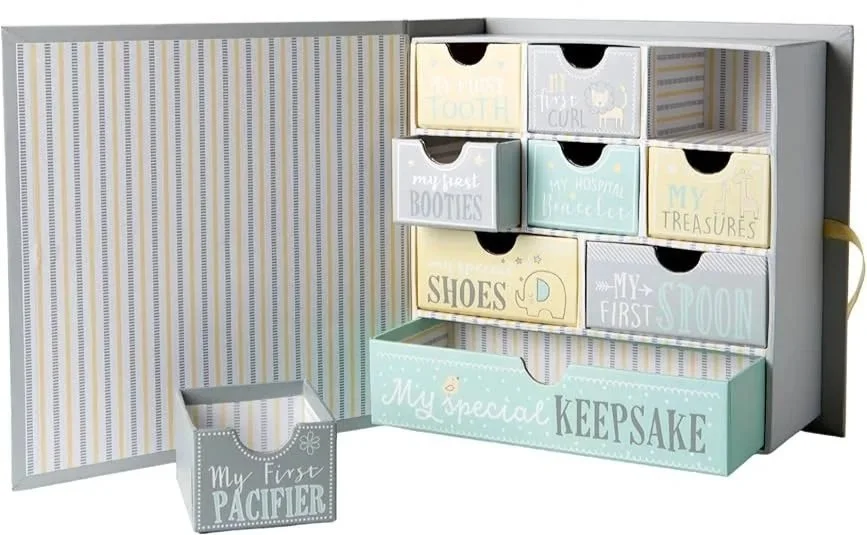
If you have a collection—mugs, snow globes, cards, baby clothes, artwork—imagine you’re curating a small exhibit.
Keep the best
Keep the most meaningful
Keep the ones that tell the story clearly
Because when everything is kept, nothing gets highlighted. It all becomes general clutter—and the truly special items get lost in the noise.
Create Loving Limits (So Keepsakes Don’t Take Over)
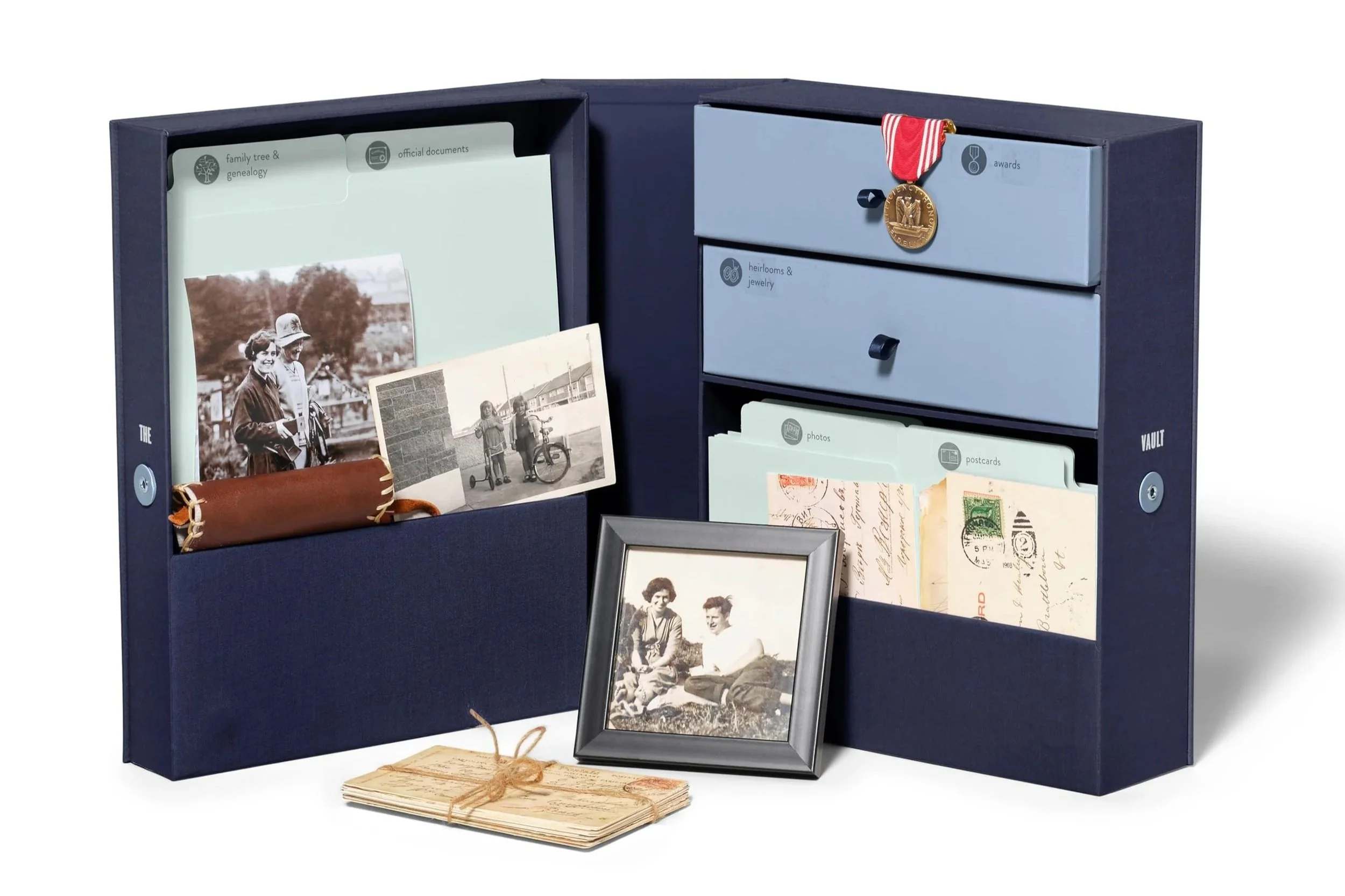
Sentimental items do best with boundaries:
one memory box per person or life chapter
one shelf or one drawer
one container that stays contained
If it doesn’t fit, it’s not a failure—it’s information. It’s your space telling you what it can realistically hold.
Keep the Memory, Not the Physical Item

This is where photo management becomes a game-changer.
Many sentimental items can be photographed or camera scanned, especially:
children’s artwork and school papers
handwritten notes and letters
recipe cards
awards, certificates, small keepsakes
Even better: pair the image with the story.
Write:
who it belonged to
why it matters
a favorite memory connected to it
A digital image with a short story often preserves the meaning better than a box of unlabeled keepsakes.
And it’s much easier to share with family—without the responsibility of storing everything.
What to Do With What You Release

Letting go can be an act of care:
offer meaningful items to one person who truly wants them
donate thoughtfully
recycle what you can
release the rest without guilt
Your home does not need to be the archive for your entire past.
A Final Thought
Letting go of sentimental clutter isn’t about erasing your story.
It’s about editing it with intention.
When you choose what to keep with heart—not guilt—you create space for peace, clarity, and the life you’re living now… while making future transitions easier for the people you love.
Want help getting started?
Download my free Sentimental Decluttering Guide for gentle first steps, decision-making prompts, and memory-preserving ideas.

Hi! I’m Amy, a professional home organizer in Maine. I travel within 30 miles of Portland, Maine clearing clutter from people’s homes. I take away the overwhelm and stress that having too much stuff can cause by working with you to help you release what no longer serves you and thoughtfully organize the items you want to keep in a way that functions for you and your family. I’ll even remove and drop off your donations, recyclables and trash.
Click hereto schedule a complimentary phone consultation with me to talk about how I can help you feel stress-free and at peace in your home!